Invisalign vs. Braces: Which Teeth-Straightening Option Is Right for You?
If you’ve been thinking about straightening your teeth, you’ve probably ended up in the same place as almost everyone else: comparing Invisalign vs. braces and wondering which one actually makes sense for your life. On paper, both can move teeth. In real life, the choice is a little more personal than that.
Some patients want the most discreet option possible because they spend their days in meetings, on Zoom, or in front of clients. Others want something they don’t have to think about much once treatment starts. Some are dealing with crowding or spacing that bothers them every time they look in the mirror. Others are more focused on bite issues, long-term oral health, or helping a teen through orthodontic treatment without a daily negotiation.
At Richardson Dentistry, we know teeth-straightening treatment isn’t just about lining up a smile for photos. It’s about comfort, confidence, function, and choosing an option that fits your routine instead of fighting against it. If you’re weighing clear aligners vs. traditional braces, here’s what to know before making your decision.
Why Straightening Your Teeth Matters Beyond Appearance
Let’s start here, because orthodontic treatment is often reduced to cosmetics. A straighter smile can absolutely improve appearance, but that’s only part of the story. Teeth that are crowded, rotated, or poorly aligned can be harder to clean, which means plaque has more places to hide. Over time, that can increase the risk of cavities, gum inflammation, and uneven wear.
Bite alignment matters too. If your upper and lower teeth don’t come together properly, you may deal with jaw strain, chipping, grinding, or certain teeth carrying more force than they were built for. Think of it like the tires on a car: if alignment is off, everything still moves, but parts wear down faster than they should. Orthodontic treatment can help create a healthier, more balanced foundation for your smile.
For many patients in Richardson, TX, the decision to straighten teeth starts with appearance and ends with something bigger: easier hygiene, better bite function, and a smile that feels less like a problem to manage and more like your own.
What Is Invisalign?
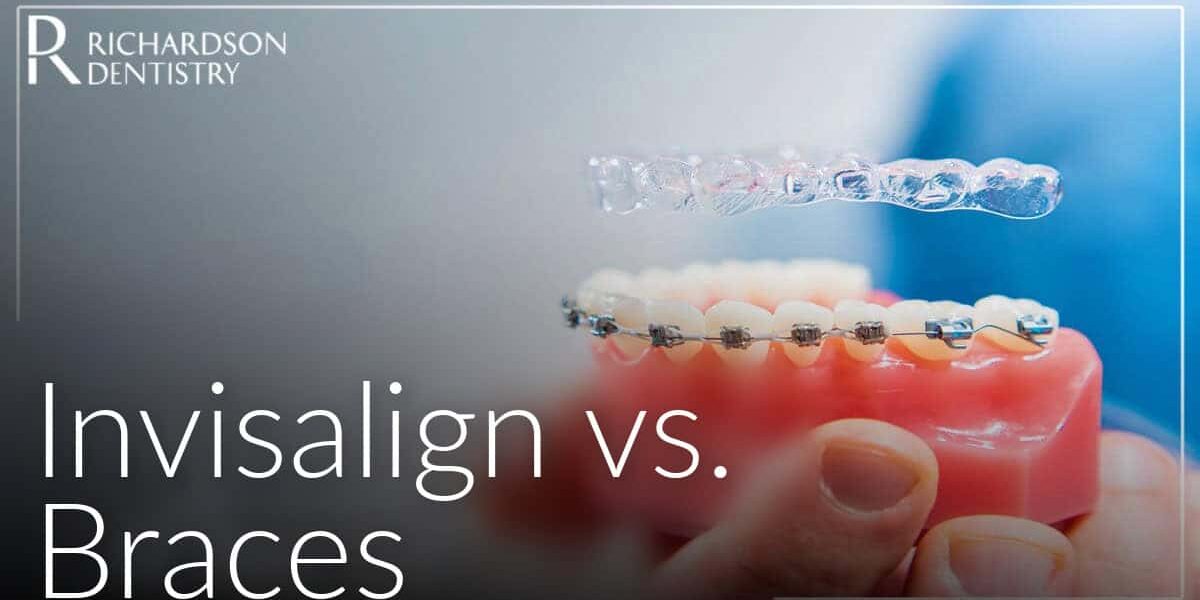
Invisalign is a system of custom-made, clear aligners designed to gradually move teeth into better positions. Instead of brackets and wires, you wear a series of smooth plastic trays that are created specifically for your mouth. Each set of aligners makes small, controlled adjustments over time.
One of the biggest reasons people choose Invisalign is simple: it’s subtle. The aligners are clear, removable, and far less noticeable than metal braces. For adults and older teens, that can be a major advantage. If you’d rather not have your orthodontic treatment announce itself every time you smile, Invisalign can feel like the quieter option.
Another major benefit is flexibility. You remove the aligners to eat, brush, and floss, which means there are no food restrictions and no trying to thread floss through wires at the end of a long day. That convenience matters more than people expect. It’s one thing to say you don’t mind adapting your routine. It’s another thing entirely when popcorn, crunchy tacos, or a quick coffee break starts feeling like a strategy session.
What Are Traditional Braces?
Traditional braces use metal brackets attached to the teeth and connected by wires. Those wires are adjusted over time to guide teeth into proper alignment. Braces have been around for a long time for one reason: they work, and they work well for a wide range of orthodontic issues.
Braces are fixed in place, so they’re always on the job. That can be a major advantage for patients who don’t want the success of treatment to depend on remembering to wear aligners for the recommended number of hours each day. With braces, compliance isn’t really a question in the same way. You don’t take them out. You don’t leave them on the bathroom counter. You don’t forget them before dinner.
They’re also often a strong option for more complex tooth movement and bite correction. While Invisalign technology has come a long way and can treat many cases that once required braces, traditional braces are still sometimes the better tool for certain orthodontic challenges. It’s less about one being “good” and the other being “bad,” and more about choosing the right instrument for the kind of movement your teeth need.
Invisalign vs. Braces: The Biggest Differences
When patients compare Invisalign vs. braces, they’re usually thinking about visibility first. That makes sense. Invisalign is clear and low-profile. Braces are more noticeable. If aesthetics are high on your list, especially for professional or social reasons, Invisalign often has the edge.
But appearance is only one part of the equation. Treatment experience is different too. Invisalign aligners are smooth and removable, while braces stay in place and include brackets and wires that can sometimes irritate the cheeks or lips, especially early on. On the other hand, braces don’t rely on daily discipline in the same way aligners do. If you know you’re the kind of person who loses sunglasses, misplaces your keys, and occasionally forgets why you walked into a room, that matters.
Cleaning is another big difference. With Invisalign, you remove the trays to brush and floss normally. With braces, oral hygiene takes more effort because food and plaque can collect around brackets and wires. It’s manageable, but it does require consistency. For some patients, that’s no problem. For others, it becomes one more thing in an already crowded day.
Then there’s eating. Invisalign lets you eat what you want because the aligners come out at meals. Braces require a little more caution. Sticky, hard, and crunchy foods can damage brackets or wires, so there are more limitations. If you’re the sort of person who snacks throughout the day or never wants to think twice before biting into something, that can influence your decision.
Who Is a Good Candidate for Invisalign?
Invisalign can be an excellent choice for adults and teens with mild to moderate crowding, spacing, and many bite concerns. It’s especially appealing for patients who want a more discreet treatment option and are comfortable taking an active role in the process.
That last part is important. Invisalign only works if you wear the aligners as directed, usually around 20 to 22 hours per day. That means removing them for meals and oral hygiene, then putting them right back in. If treatment with braces is like having a trainer who shows up whether you’re motivated or not, Invisalign is more like a fitness plan that works beautifully if you stick with it. The system is smart, but it can’t do much from inside a napkin during lunch.
Patients who are organized, motivated, and committed to following instructions often do very well with Invisalign. It can be particularly popular among working professionals, college students, and adults who want orthodontic treatment without the look of metal braces.
Who May Be Better Suited for Braces?
Braces may be the better option for younger patients, patients with more complex alignment issues, or anyone who would benefit from a treatment method that doesn’t depend on remembering to wear removable trays. They’re also often useful in cases involving significant tooth rotation, larger bite corrections, or movements that need more precise control.
For some families, braces are simply the less stressful choice. If a teen is likely to remove aligners too often, forget them at school, or treat the case like a loose suggestion, braces can provide structure. They’re fixed, predictable, and always working in the background.
Braces can also be a strong option for patients who want a straightforward treatment path and don’t mind the visible hardware. Some people actually prefer that. They don’t want to keep up with removing trays, cleaning trays, tracking wear time, and planning around meals. They’d rather have the system stay put and let the treatment do its thing.
Which Option Is More Comfortable?
This is one of the most common questions, and the honest answer is that both Invisalign and braces come with an adjustment period. Teeth move by pressure, so some soreness is normal with either option, especially after starting treatment or moving to a new aligner set or wire adjustment.
That said, many patients find Invisalign more comfortable overall because there are no brackets or wires rubbing against the inside of the mouth. The aligners are smooth and custom-made, which can make day-to-day wear feel easier once you get used to them.
Braces can cause irritation, particularly in the early stages, and certain adjustments may leave teeth feeling tender for a few days. It’s not usually unbearable, but it’s not nothing either. Think of it less like sharp pain and more like that dull, persistent reminder that something is changing. The upside is that discomfort typically fades as the mouth adapts.
Which Is Faster: Invisalign or Braces?
Patients naturally want to know which treatment gets them to the finish line faster. The answer depends on your specific case. For some mild to moderate cases, Invisalign can be very efficient. For more complex movements, braces may be the better route and sometimes the faster one.
What often gets left out of this conversation is compliance. Invisalign treatment can stay on schedule when aligners are worn exactly as prescribed. If they aren’t, treatment can drag. Braces don’t have that same variable because they’re fixed in place. So while Invisalign may look faster on paper for some cases, the real-world timeline depends heavily on the patient.
This is why a personalized orthodontic evaluation matters. Two patients can have what seems like the same issue from across the room and need very different treatment strategies once their bite, spacing, tooth movement, and oral health are properly assessed.
Cost Considerations for Invisalign and Braces
The cost of Invisalign and braces can vary based on treatment complexity, length of care, and the details of your case. In many situations, the price difference between the two is smaller than patients expect. More advanced cases typically require more time and planning, which can affect cost regardless of the system used.
It’s also worth considering value, not just the number on the estimate. If Invisalign fits your lifestyle so well that you’re more likely to complete treatment confidently and consistently, that matters. If braces offer better control for your specific case and produce the most predictable result, that matters too.
For patients in Richardson, TX, discussing payment options, insurance benefits, and available plans with the dental team can make the decision much easier. Orthodontic treatment is an investment, but it should be one that feels informed rather than mysterious.
Lifestyle Questions to Ask Yourself Before Choosing
If you’re stuck between braces or Invisalign, it helps to move beyond the marketing and ask practical questions. Are you likely to wear aligners as directed every day, even when life gets busy? Do you want to avoid visible brackets for work, school, or social reasons? Are you okay with food restrictions, or would that wear on you over time?
You should also think about your habits. Do you sip coffee throughout the day? Do you snack often? Are you disciplined with routines, or do you prefer systems that require less active participation? There’s no morally superior answer here. This isn’t a personality test with a gold star at the end. It’s just about matching treatment to reality.
The best option is often the one that fits your life well enough that you can stick with it comfortably. A treatment plan only helps if it works in the world you actually live in, not the idealized version of yourself who meal-preps, never forgets anything, and somehow always flosses before bed.
Why a Personalized Consultation Matters
The internet can give you a strong overview of Invisalign vs. braces, but it can’t examine your teeth, evaluate your bite, or tell you how your specific smile is likely to respond to treatment. That’s where a professional consultation becomes essential.
At Richardson Dentistry, a personalized evaluation can help determine which option makes the most sense for your goals, oral health, and daily routine. Sometimes patients come in convinced they want Invisalign and learn that braces may be better for their case. Other times, they assume braces are their only choice and discover they’re excellent candidates for clear aligners.
This is where dentistry becomes less like shopping and more like planning. You’re not just picking a product off a shelf. You’re choosing a treatment approach that should support both your smile and your life.
Invisalign vs. Braces: Which Is Right for You?
If you want a discreet, removable option and you’re committed to wearing aligners consistently, Invisalign may be the right fit. If you need more complex tooth movement, prefer a fixed appliance, or want a treatment that doesn’t rely as much on daily discipline, braces may be the stronger choice.
Neither option is universally better. The right answer depends on your teeth, your bite, your goals, and your habits. What works beautifully for one patient may be frustrating for another. The real win is not choosing the trendier option. It’s choosing the one that gets you to a healthier, straighter smile with the least friction.
If you’re considering Invisalign or braces in Richardson, TX, the next step is a professional consultation. A tailored evaluation can give you real answers, a realistic timeline, and a treatment recommendation based on your smile, not a generic checklist.
Schedule a Consultation at Richardson Dentistry
If you’re ready to stop comparing screenshots, reading conflicting advice, and wondering which treatment is right for you, it may be time to talk with a team that can evaluate your smile in person. At Richardson Dentistry, we help patients explore modern, personalized solutions for straighter, healthier smiles.
Whether you’re leaning toward Invisalign, traditional braces, or you’re still somewhere in the middle, a consultation can help clarify your options. Contact Richardson Dentistry today to schedule your visit and take the next step toward a smile that feels as good as it looks.