
How to Cure TMJ Permanently
If you are searching for how to cure tmj permanently, you are probably tired of getting half-answers. Maybe your jaw clicks every time you chew. Maybe you wake up with headaches, ear pain, or a sore face that makes the whole morning feel off. Maybe you have been told to “just wear a night guard” or “try to relax,” and that advice has not touched the real problem.
The truth is that a permanent fix for TMJ is rarely about one magic product or one isolated symptom. It starts with understanding why your temporomandibular joint is under stress in the first place. For some people, the root cause is teeth grinding. For others, it is bite imbalance, muscle tension, inflammation, airway issues, stress habits, trauma, or a combination of factors stacked on top of each other like dominoes.
At Richardson Dentistry, this whole-body view matters. TMJ disorder is not just about a sore jaw. It can affect sleep, concentration, eating, and everyday life. If you want lasting pain relief, the goal is not to chase symptoms forever. The goal is to identify the root cause and build the right treatment plan around it.
What Is TMJ, Really?
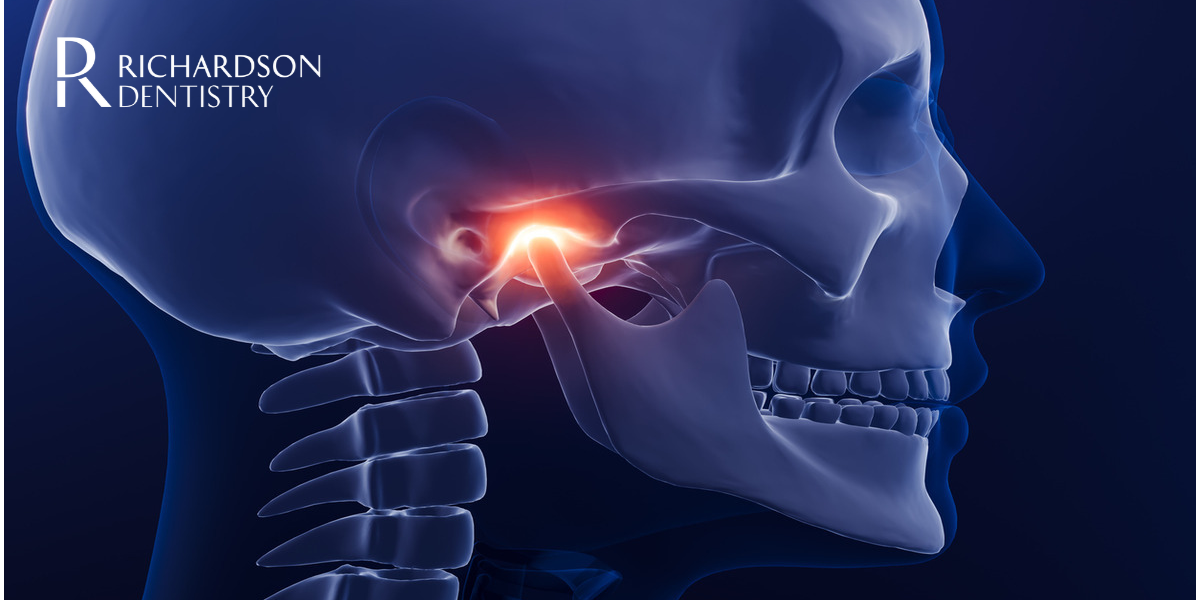
TMJ refers to the temporomandibular joint, the hinge-like joint that connects your lower jaw to your skull. You have one on each side of your face, and they work together every time you talk, yawn, chew, swallow, or open your mouth. It is a small structure doing a very big job.
Because the temporomandibular joint relies on bones, cartilage, soft tissue, discs, ligaments, and surrounding muscles all working in sync, it does not take much for things to go sideways. When that balance is disrupted, temporomandibular disorders can develop. That is why tmj disorders affect people in such different ways. One person feels clicking. Another feels severe pain. Another gets facial pain, ear pain, tension headaches, or stiffness when trying to open your mouth fully.
Can You Cure TMJ Disorder Permanently?
In many cases, yes, you can cure tmj disorder permanently or at least achieve long-term, stable relief that feels permanent in real life. But the answer depends on what is driving the dysfunction. TMJ disorder is a broad term, not a single disease with one universal fix.
Think of it like a check-engine light. The warning is real, but the repair depends on what is going wrong under the hood. Some TMJ issues are muscular and respond well to self care, physical therapy, and habit changes. Others come from misaligned teeth, bite instability, disc problems, arthritis, or structural damage inside the jaw joint. The right treatment has to match the actual problem.
That is why lasting improvement usually comes from diagnosing the root cause, not guessing. A patient with jaw clenching from stress needs a different approach than someone with bite collapse, sleep-related teeth grinding, or temporomandibular joint dysfunction caused by trauma.
Common Signs of TMJ Disorder
TMJ symptoms can show up in ways that do not seem connected at first. A lot of patients do not realize their headaches, neck tightness, or ear discomfort are part of the same picture.
Common symptoms include tmj pain, jaw pain, clicking or popping, limited movement, facial pain, ear pain, headaches, tenderness in the jaw muscles, and soreness when chewing. Some people experience pain near the temples. Others notice their lower jaw shifts to one side when they open your mouth. In more severe cases, the jaw joint can even lock temporarily.
You may also notice increased muscle tension in the face, neck, and shoulders. That matters because the temporomandibular joint does not work in isolation. When the surrounding muscles are overworked, inflamed, or guarding against discomfort, they can amplify the cycle of pain.
The Root Cause Matters More Than the Label
A real cure starts with asking better questions. Why is the joint irritated? Why are the jaw muscles overfiring? Why does the pain keep coming back?
The underlying causes of tmj disorder often include teeth grinding, teeth clenching, bite problems, misaligned teeth, airway issues, injury, arthritis, poor posture, and chronic stress. Habits like gum chewing, nail biting, or eating chewy foods all day can also keep the joint irritated. In some patients, muscle spasms and muscle tension are the main problem. In others, the disc inside the joint is displaced or the joint surfaces are inflamed.
This is where a wellness-focused dental perspective can be especially helpful. If the root cause involves your bite, your sleep, your jaw position, and the way your muscles compensate, a quick symptom-only fix usually falls short.
Self Care Can Help, but It Is Not Always the Full Answer
For mild temporomandibular disorders, self care can calm things down and sometimes stop the cycle before it gets worse. That does not make it trivial. It just means the body may respond well when the strain is removed.
Useful self care habits include eating soft foods for a period of time, avoiding chewy foods, limiting wide yawning, and being mindful not to force the jaw open. If you are experiencing tmj pain after a stressful week, these small changes can reduce pain significantly.
At home, an ice pack can help during flare-ups, especially when there is acute inflammation. Moist heat often works better for tight, overworked jaw muscles because it helps improve circulation and ease pain from stiffness. Some patients alternate an ice pack and moist heat depending on whether the problem feels more inflamed or more tight and achy.
Relaxation exercises can also help reduce stress patterns that feed tmj pain. Deep breathing sounds simple, but it matters. Many people hold tension in their face without realizing it. Their teeth touch all day. Their tongue braces against the roof of the mouth. Their shoulders creep up toward their ears. That constant bracing can keep the temporomandibular joint dysfunction going.
Jaw Exercises and Physical Therapy
Jaw exercises can be useful when they are recommended for the right kind of dysfunction. Gentle movement, posture work, and stretching may help restore coordination and relieve tmj pain when muscle imbalance is driving the problem.
A trained physical therapist or physical therapist with experience in temporomandibular disorders can guide mobility work, soft tissue release, and strengthening strategies. Physical therapy may focus on the jaw joint itself, but it also often addresses the neck, posture, and breathing mechanics. That makes sense because the joint connects into a larger musculoskeletal system, not a vacuum.
Physical therapy is especially valuable when patients cannot open your mouth comfortably, have recurring muscle tension, or notice pain after long workdays at a computer. If your jaw feels like it is dragging the rest of your face into a fist, physical therapy may be part of the right treatment.
Medications Can Reduce Symptoms, but They Do Not Create a Permanent Cure
When pain is sharp or inflamed, short-term medication may help relieve pain and make daily function easier. Over the counter medications such as nonsteroidal anti inflammatory drugs can reduce inflammation and provide counter pain support during a flare.
In some cases, a physician or dentist may discuss muscle relaxants or muscle relaxers if clenching or muscle spasms are a major issue. These can help some patients sleep more comfortably or break a short-term cycle of guarding.
Still, medications are usually support tools, not permanent solutions. They may offer pain relief, but they do not correct a bad bite, stop chronic teeth grinding at its source, or reposition a strained jaw joint. If you only numb the alarm, the fire can keep burning.
Night Guards and Oral Appliances
A custom mouth guard can be helpful for patients who grind or clench, especially during sleep. It may protect the teeth and reduce overload on the temporomandibular joint. For some people, this alone leads to major relief.
But not every mouth guard is the same, and not every case of tmj disorder should be treated with the same appliance. A store-bought guard may cushion the teeth, but it does not account for bite balance, jaw position, or the root cause of your symptoms. In some cases, the wrong appliance can even make muscle tension worse.
For patients with chronic clenching, bite instability, or airway-related issues, a professionally guided approach matters. If you are dealing with persistent symptoms, learning more about TMJ and TMD solutions can help you understand what comprehensive care may involve.
When Orthodontic Treatment Is Part of the Answer
Sometimes the issue is not just the joint or the muscles. It is the way the teeth fit together. Misaligned teeth, crowding, bite discrepancies, and uneven pressure can all contribute to chronic strain.
In those situations, orthodontic treatment may be part of how to treat tmj for the long term. The goal is not cosmetic alone. It is functional balance. When the bite is unstable, the jaw may shift every time you chew or speak, and the surrounding muscles have to compensate.
For the right patient, Invisalign or other orthodontic treatment can improve alignment and reduce strain patterns over time. If bite balance is part of your diagnosis, it may help to explore clear aligner treatment options as part of a broader treatment plan tailored to your needs.
When TMJ Is Connected to Sleep, Stress, and Whole-Body Health
This is where many people miss the bigger picture. Teeth grinding is not always just a “bad habit.” In some patients, it is linked to airway resistance, poor sleep quality, or the body trying to stabilize the jaw during sleep. Stress can make everything louder, but stress is not always the only cause.
Research from the National Institute of Dental and Craniofacial Research shows that temporomandibular disorders are complex and can involve biological, behavioral, environmental, social, and emotional factors. That is one reason a one-size-fits-all approach often fails. The field of dental and craniofacial research continues to reinforce the need for individualized care.
If your symptoms are worst in the morning, if you wake with headaches, or if your partner hears grinding at night, your dentist may consider whether sleep patterns are part of the root cause. In some cases, airway-focused care or sleep-related oral appliance support may become part of the conversation.
Do Severe Cases Always Involve Surgery?
No. Most cases do not involve surgery, and many improve with conservative treatment options. That matters because people often assume that severe pain means they are headed straight for a procedure. Usually, that is not the first step.
A minimally invasive procedure may be considered in certain advanced cases, especially when the joint is structurally damaged or conservative care has failed. Open joint surgery is reserved for select situations and is generally not the starting point for temporomandibular joint dysfunction.
The best path is usually stepwise: identify the root cause, calm inflammation, reduce overload, improve function, and reassess. Surgery is a tool, not a default. The right treatment should be proportional to the problem.
What a Permanent Treatment Plan Often Looks Like
If you want to cure tmj disorder permanently, the process typically involves more than one layer. A treatment plan tailored to you may include bite analysis, imaging, a custom appliance, physical therapy, stress reduction strategies, and treatment of any underlying dental or airway problems.
In practical terms, that could mean reducing inflammation first, switching to soft foods temporarily, using moist heat, avoiding gum chewing, and improving sleep habits. Then it may move into a more targeted phase that addresses bite problems, clenching patterns, misaligned teeth, or structural joint strain.
A good treatment plan does not just chase pain relief. It aims to reduce pain, restore function, and prevent the same mechanical stress from returning. That is how you move from temporary comfort toward permanent solutions.
When to See a Dentist for TMJ Pain
If tmj pain keeps returning, if you cannot open your mouth normally, if you hear persistent clicking with pain, or if you have severe pain that interferes with eating or sleeping, it is time to get evaluated. The same is true if your symptoms are affecting everyday life, work, concentration, or your ability to enjoy meals without bracing for discomfort.
A dentist with experience in temporomandibular disorders can assess your bite, muscle patterns, joint function, and oral health together. That whole picture matters. You do not want to spend months patching symptoms if the root cause is still sitting there, quietly pushing the problem forward.
A Realistic Answer to How to Cure TMJ Permanently
The honest answer is this: there is no single universal cure for every case of tmj disorder, but many patients can get lasting relief when the diagnosis is accurate and the treatment matches the true cause. That may involve self care, jaw exercises, physical therapy, a custom mouth guard, orthodontic treatment, sleep-related evaluation, or a combination of other treatments.
What does not usually work is guessing. TMJ disorder is too individual for that. The temporomandibular joint is one of those small systems that can throw a surprisingly large shadow over your life when it is not working well. But with the right treatment, that shadow can lift.
For patients in Richardson looking for a more complete, wellness-focused approach to chronic jaw pain, tmj pain, and temporomandibular joint dysfunction, the goal should always be the same: find the root cause, protect the joint, calm the muscles, and create long-term stability instead of short-term patchwork.